01 /
Choose your setup
Adjust the ramp height or swap the road surface. Change one variable at a time for a fair comparison.
Turn stopping distance into a challenge. Pick a ramp height, predict the finish, and let physics do the driving.
3 road surfaces · Adjustable ramp · Hands-on learning
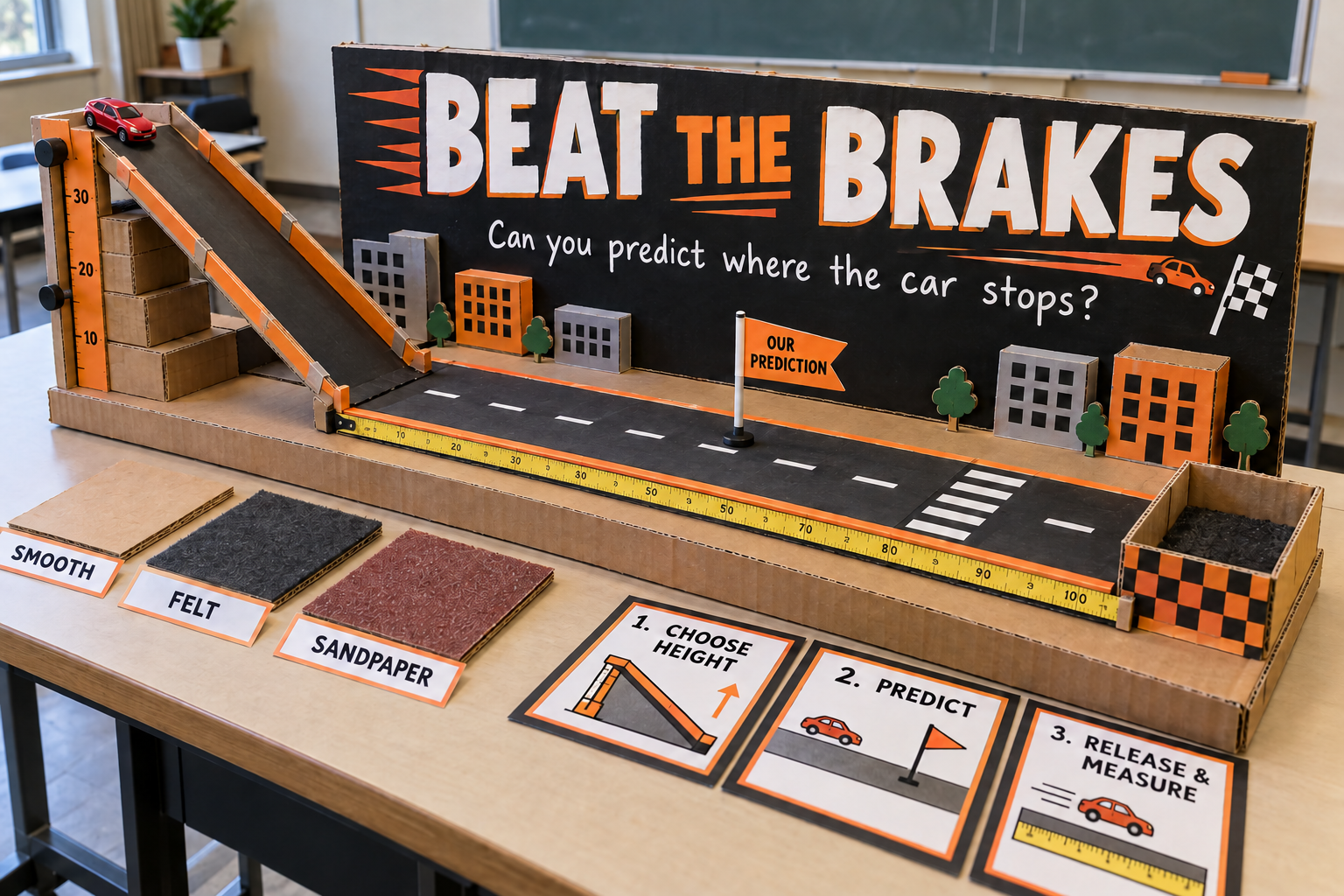
Launch a virtual car, try three textures, change the speed or ramp height, and compare every run with live graphs.
Free to play · No sign-up · Simulation results
Made for curious students and classroom demonstrations. Every run creates something you can measure, compare and explain.
Adjust the ramp height or swap the road surface. Change one variable at a time for a fair comparison.
Place the “Our Prediction” flag beside the road where you think the car will stop. Release without a push.
Measure from the ramp exit to the stopping point. Repeat three times and compare the average distances.
Your baseline road. A firm, smooth surface usually lets the car roll farther, making it a useful starting point for comparisons.
The result depends on the car and materials. Let your measurements decide which surface stops it first.
Explore speed, deceleration and rolling resistance with a reusable model that turns a physics lesson into a friendly prediction game.
Sample price · Demo storefront
Checkout is a demonstration. No payment or order will be submitted.
Question: How does road surface affect the mean stopping distance of a toy car?
Keep the ramp height, car, release method and measuring zero point the same. Enter all distances in metres.
| Surface type | Trial 1 (m) | Trial 2 (m) | Trial 3 (m) | Mean distance (m) | Prediction result |
|---|
Entries save in this browser on this device.
Mean stopping distance = (Trial 1 + Trial 2 + Trial 3) / 3. Bars show measured means; no example results are prefilled.
It explores how starting speed and surface resistance affect stopping distance. A higher release height generally increases speed at the bottom. Comparing surfaces reveals how different materials resist rolling.
No. The car slows because of resistance from its wheels, axles and the road. The name describes the stopping-distance challenge.
Use the same car and release method. When comparing textures, keep ramp height fixed. When comparing heights, keep the surface fixed. Run at least three trials for every condition.
This is a product demonstration storefront. You can explore the kit and create a downloadable order summary, but payments, fulfilment and delivery are not connected.